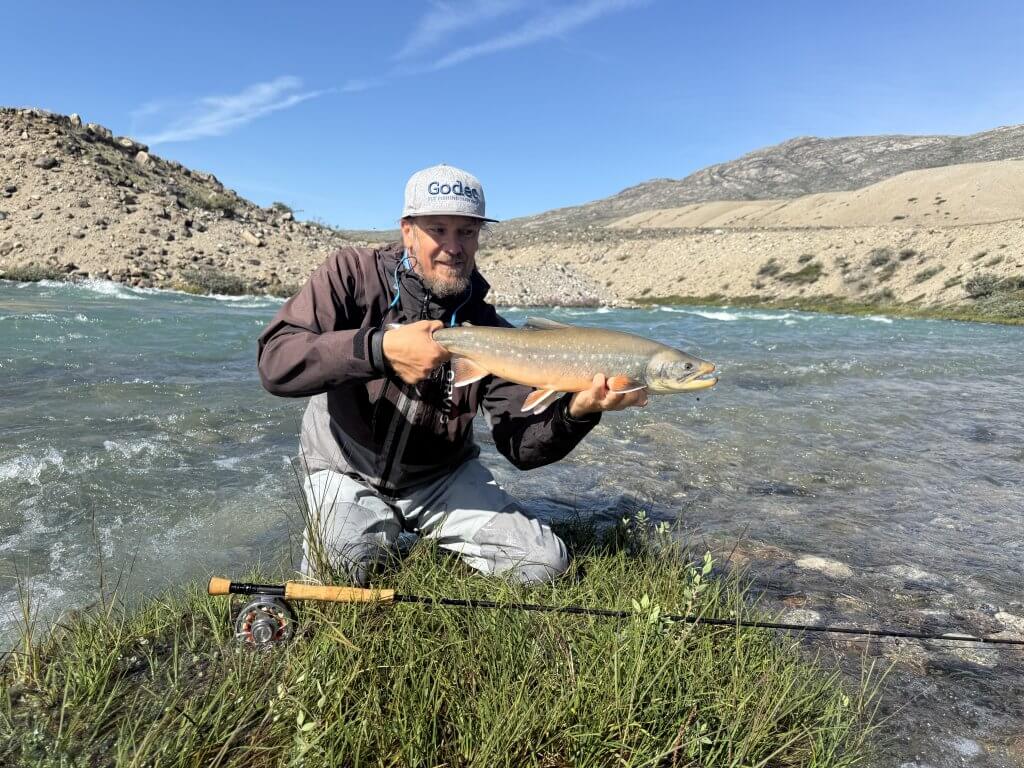
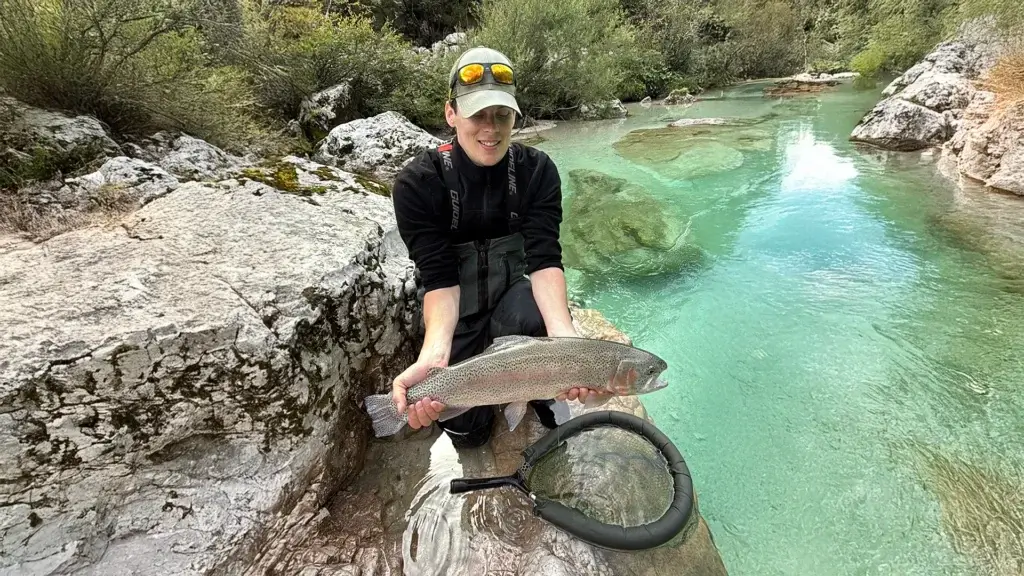
Winter fly fishing in Slovenia mostly means huchen, plus grayling and rainbow trout in some districts. Fish are most active at midday, when the water is warmest.
When most trout districts close in autumn, many anglers put their rods away until spring. You do not have to. Winter fly fishing in Slovenia offers peace on the water, beautiful light and the chance of fish you would not target in summer.
What can you catch in winter?
- Huchen, the main winter target and Europe’s largest salmonid. See Huchen fly fishing in Slovenia.
- Grayling: some districts allow grayling fishing in the colder months.
- Rainbow trout in districts with an extended season.
Rules vary a lot between districts, so check the regulations and buy the right permit before every winter trip.
Best time of day
In winter there is no need to be on the water at dawn. The water is warmest in the middle of the day, so fish are most active roughly between 11 am and 3 pm. On sunny days you may even see small midge hatches.
Techniques
- Nymphing close to the bottom. Fish are sluggish in winter and hold in deeper, slower water.
- Slow streamer retrieves for huchen and big trout.
- Small dry flies on warmer days when midges hatch.
Tackle and clothing
- Warm layers: thermal base layer, fleece and a windproof jacket.
- Thick socks and slightly roomier wading boots so your feet are not squeezed.
- Fingerless gloves and a warm hat.
- A flask of hot tea.
- Anti-freeze for rod guides, or at least patience when clearing ice.
More in our fly fishing gear checklist.
Safety first
In winter, rocks can be icy and the water is freezing. Wade carefully, use a wading staff and a wader belt. If you are inexperienced, do not fish alone, and always tell someone where you are going. After landing a fish, do not keep it in the freezing air for long.
FAQ: winter fly fishing
Is winter fly fishing allowed everywhere?
No. Most trout waters have a closed season in winter. Winter fly fishing is possible in districts where the rules allow it, mainly for huchen and in some places for grayling.
Which rivers are best for winter fly fishing?
For huchen, Danube-basin rivers such as the Sava, Krka, Kolpa and Savinja. For grayling and rainbows, it depends on each district’s rules that season.
Do fish feed in winter?
Yes, but more slowly. Cold water slows their metabolism, so fish your fly slowly and close to the bottom. Takes are often subtle.
How do I stop my guides icing up?
Line dressing helps, and so does dipping the rod in the water, which is warmer than the air. The best fix is to fish the warmest part of the day.
Where can I check river levels?
Slovenia’s Environment Agency publishes water data. Check it before every winter trip.
How should I prepare for winter fly fishing?
The day before, check the weather, river levels and district rules. Pack layered clothing, spare gloves and socks, a flask with a hot drink and some snacks. Keep your phone in a waterproof pouch close to your body, as batteries drain fast in the cold. For huchen, check your leader strength and hook sharpness.
Is winter fly fishing suitable for beginners?
Cold, slippery rocks and sluggish fish make winter fly fishing more demanding. Beginners should build experience in spring or autumn first, and try winter fishing with an experienced angler or guide.
Winter fly fishing with a guide
In winter, choosing the right water and the right moment matters even more. If you would like to try winter fly fishing or a huchen trip, contact us.